Desertification is considered as the third most important challenge of the world in the twenty-first century.
According to reports from international organizations One sixth of the population, three-quarters of dry land and one third of the world's land an area of five billion hectares in 110 countries, it is exposed to the phenomenon of desertification.
Targets
Making and procurement a fogger system in order to spray the bacteria and stabilize the shifting sands Optimization of growth conditions in sterile and non- sterile conditions for production of BIO-STROMATECH and strength of the shifting sands.
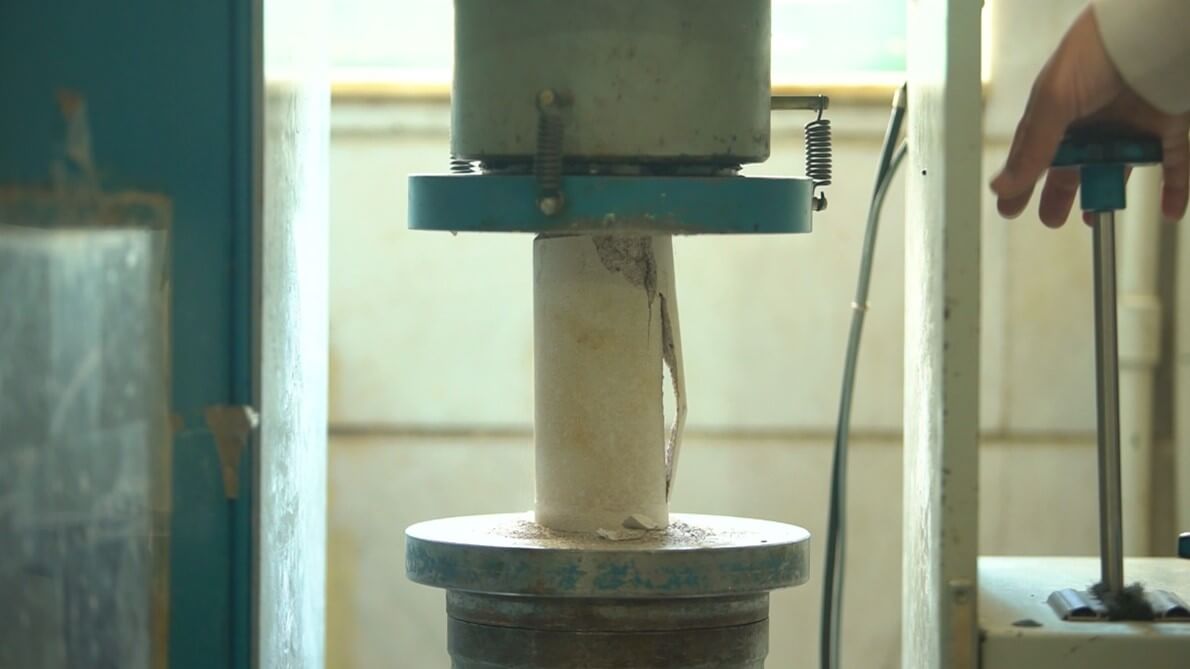
Compressive strength test
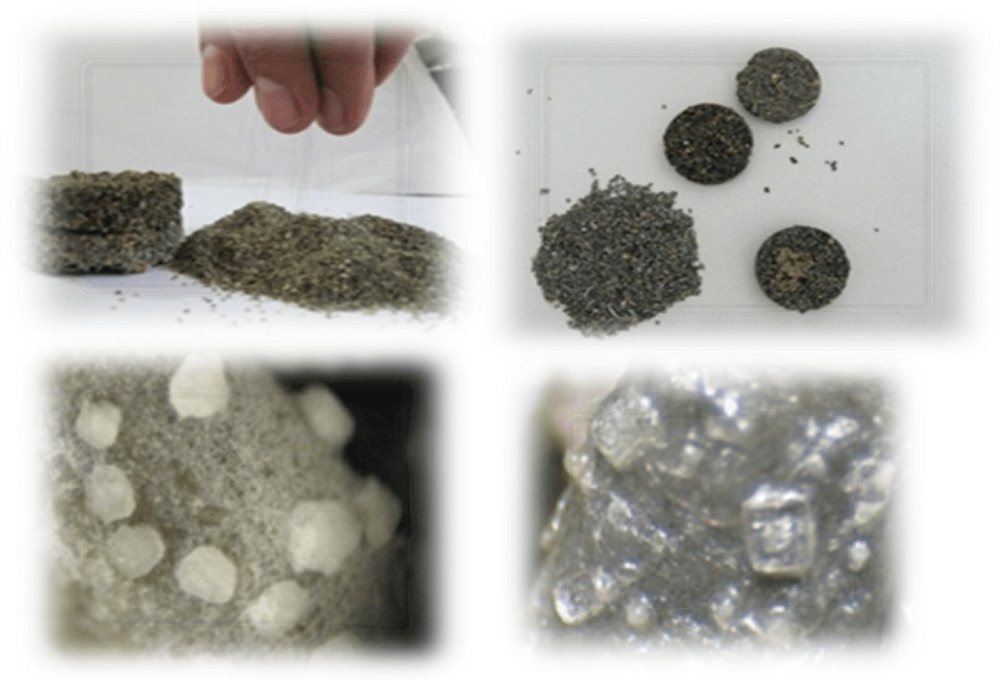
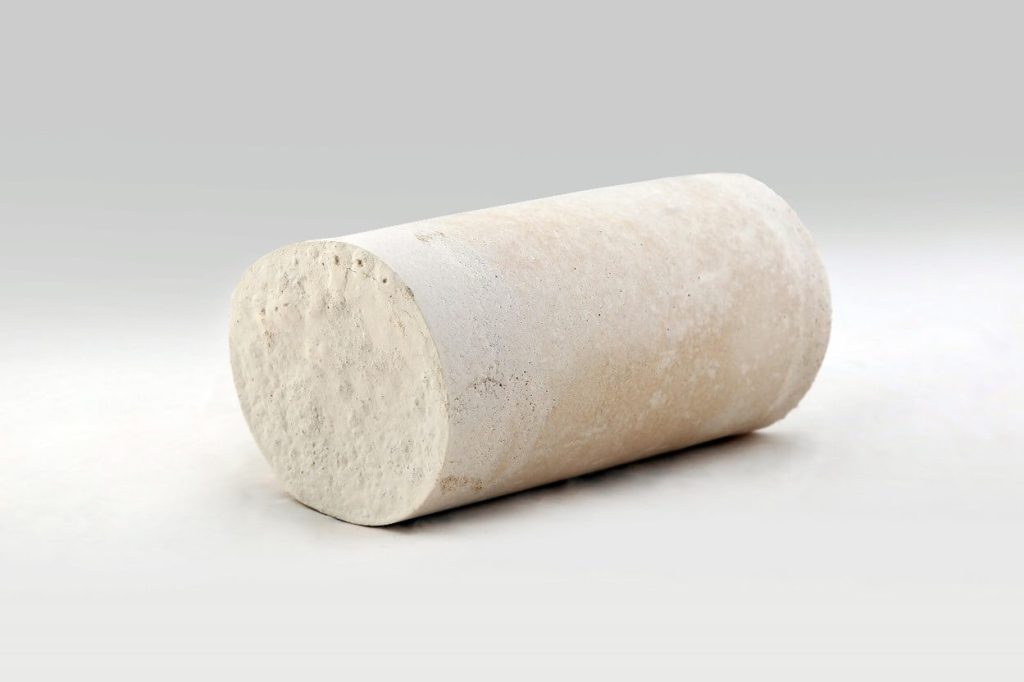
We proved that Sand treated with MICP method can withstand a Compressive Pressure greater than 20 MPa. compressive strength test At laboratory conditions, unconfined compressive strength (UCS) ranging from 300 kPa up to 30 MPa were attained..
Another Problem
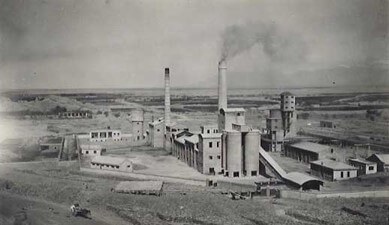
Energy consumption by the cement industry is estimated at about 2% of the global primary energy consumption, or almost 5% of the total global industrial energy consumption.
Due to the dominant use of carbon intensive fuel, e.g., coal, in clinker-making, the cement industry is also a major emitter of CO2
Besides energy consumption, the clinker-making process also emits CO2 due to the calcining process
low penetration and high costs of cement
Introducing a Solution
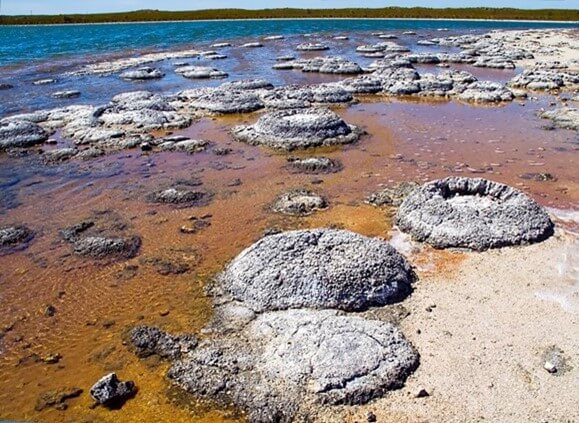
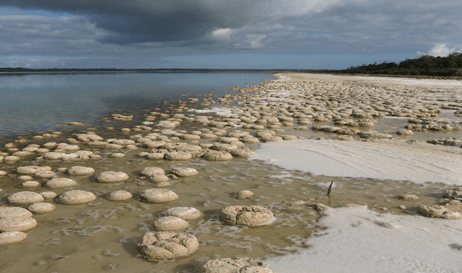
Stromatolites, which are the oldest remaining fossils on earth produced by environmental microorganisms, date to 3 billion years ago. These microorganisms, which produced Stromatolites through secreting calcium carbonate, still exist in nature, and can secrete compounds that flocculate soil particles.
MICP as a Solution
In nature, three groups of microorganisms cause microbial induced calcite precipitation (MICP), and biocementation takes place as a useful byproduct in them:
(1): Photosynthetic microorganisms such as cyanobacteria and algae that carry out photosynthesis in water and can stabilize CO2
(2) Sulfate-reducing microorganisms responsible for the multistage dissimilatory reduction of sulfates.
(3) Organisms that play a part in the nitrogen cycle through ammonification of amino acids/ reduction of nitrates/ hydrolysis of urea.
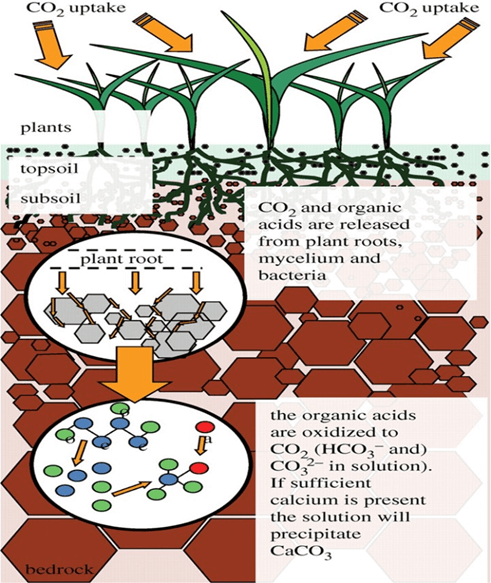
Plants can stabilize the land and sand dunes. During the process of photosynthesis, plants absorb atmosphere carbon dioxide to provide their needed organic materials. In recent years, it has been proven that plants can precipitate carbonate in the soil through absorbing carbon dioxide during photosynthesis and reaction of the roots with soil. Carbonate precipitates stabilize the soil over the years. It is known that sand dunes and deserts are stabilized through arboriculture. The trees roots transact with soil around rhizosphere which results in carbonate production in soil and increased soil adhesion, so that stabilization is maintained in the sand dunes even after plants destruction. In addition to microorganisms, calcium carbonate can be produced by chemical mechanisms in nature
Numerous studies have been conducted to date to investigate calcium carbonate sedimentation through microbial induced calcite precipitation in relation to strengthening of soil used in surface reconstruction, in bricks, and in ordinary self-repairing concrete and historical reconstruction.
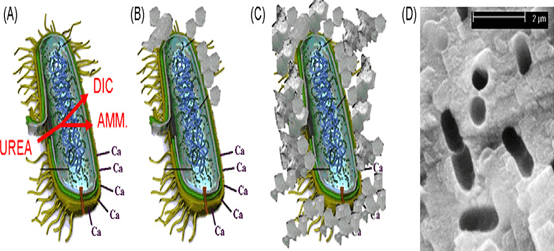
Urea-hydrolyzing bacteria are used in most MICP applications because this process can be controlled easily and the needed materials are relatively inexpensive and easily available in natural environments. Another one of its advantages over other pathways of carbonate production is its capability of mass-producing carbonate in a relatively short time.
In MICP through urea hydrolysis, urease catalyzes the urea substrate and precipitates carbonate ions in the presence of ammonium. If a calcium source is available, these ions precipitate as CaCO3. Urea hydrolysis results from metabolic processes that depend on the bacteria used for this purpose.